Most job ads look the same: a title, a list of duties, a longer list of requirements and a line about a “fast-paced environment”. Candidates scroll past them. A few job ads break that pattern so well that people still share them years later.
Below are eight classic job ad examples that recruiters and employer brand teams keep coming back to. Some of these campaigns ran years ago and are no longer live, but the ideas behind them still work. For each one, you’ll find a short “What to copy” takeaway you can apply to your next posting. After the examples, there’s a practical section on what a good job ad needs today: pay ranges, inclusive wording, skills-based requirements and a length that works on a phone.
1. Apple: “Hungry Designers Wanted”
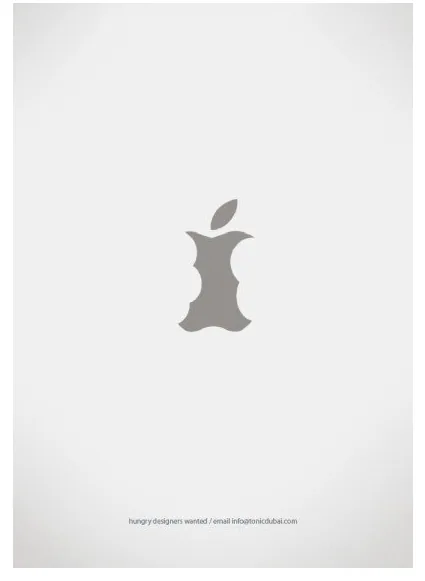
This ad leans on one of the most recognizable logos in the world. It gives the familiar apple a playful twist that speaks directly to designers, and it hints at the kind of work they would do. It is light and funny, and it is aimed squarely at its audience: young, talented and ambitious designers.
What to copy: Speak to one audience, not everyone. Use a visual or a line that only your target candidates will fully “get”. If you have a strong brand, play with it instead of hiding it behind a generic stock photo.
2. Twitter: The “Tweeter in Chief”
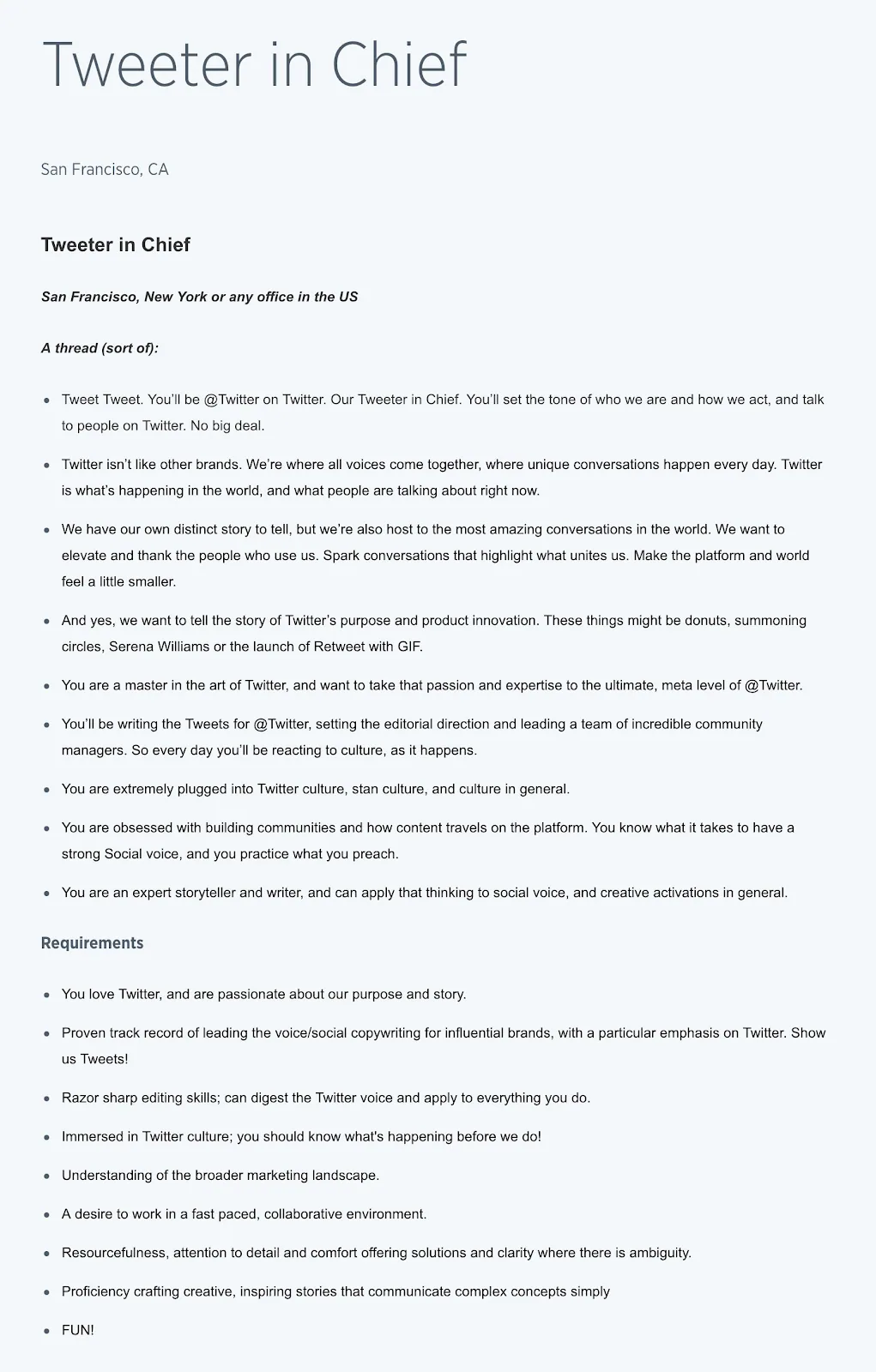
Nobody had heard of a “Tweeter in Chief” before Twitter advertised the role. Behind the catchy title was a clear job: running the company’s official account. The whole description was written in the same cheeky voice as the brand itself.
What to copy: Write the ad in the voice of the job. A social media role should read like great social copy; an engineering role can show how your team thinks about problems. But keep the real job title somewhere in the ad, because candidates search for standard titles like “Social Media Manager”, not invented ones.
3. Starbucks: An On-brand Instagram Post
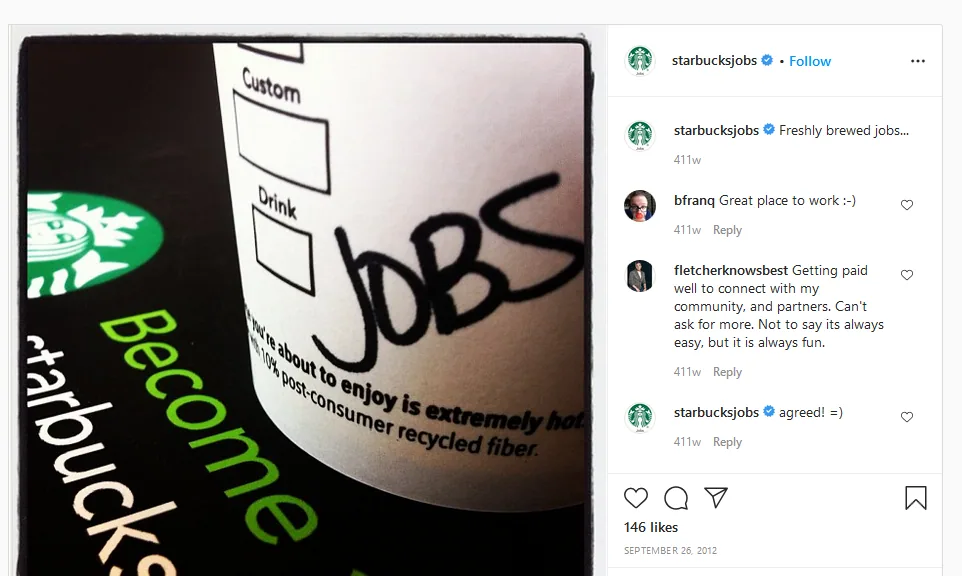
Starbucks used its product, not its logo, to make the ad instantly recognizable. Posting on Instagram put the job in front of people who already follow and like the brand, a much wider pool than a career site alone. The trade-off: the ad itself carried very little information.
What to copy: Post jobs where your future hires already spend time, and make the post look like your brand. Treat the social post as the hook, and link it to a full job page with the details candidates need to decide.
4. Berrge Tattoo: “Tattoo Artist Wanted”
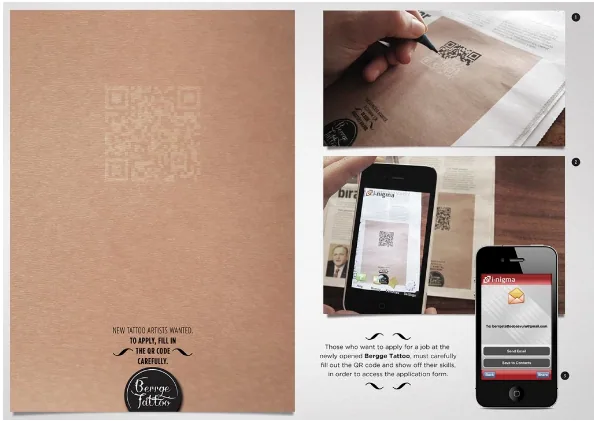
This viral ad from Berrge Tattoo hid the contact details inside a QR code that applicants had to draw themselves. Only someone with a steady hand, fine motor skills and patience could complete it. The ad was a test of the job’s core skill.
What to copy: Let candidates show the skill, not just claim it. A short, relevant task, like a small design brief or a two-question case, can replace a long list of “must-haves”. Keep it quick and fair, and make sure it doesn’t screen out people for reasons unrelated to the job.
5. Fiverr: The Self-aware “Generic” Recruitment Video
Fiverr’s recruitment video deliberately piles up every corporate cliché: the stock smiles, the buzzwords, the dramatic music. The irony is the point. By making fun of generic job ads, it signals that the company doesn’t take itself too seriously and gives candidates a feel for its culture.
What to copy: Humor works when it reflects how your team really talks. Video is a quick way to show culture, but keep it short and add captions, since many people watch on mute.
6. LEGO: A Dedicated Careers Account on Twitter
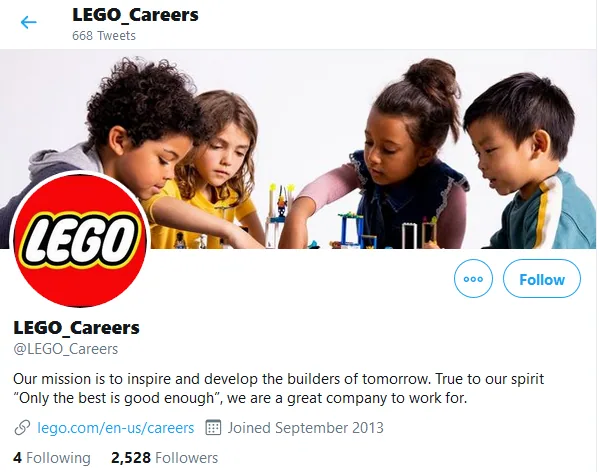
Instead of mixing job posts into its main brand channel, LEGO created a separate, fully branded careers account. It shared open roles alongside useful information about working at the company, and it made it easy for employees to pass jobs on to friends.
What to copy: Give your jobs a consistent home that people can follow. Whether it’s a careers account, a newsletter or a well-organized career site, a single place makes sharing and employee referrals much easier.
7. Mailchimp: Real Employees, Napoleon Dynamite Style
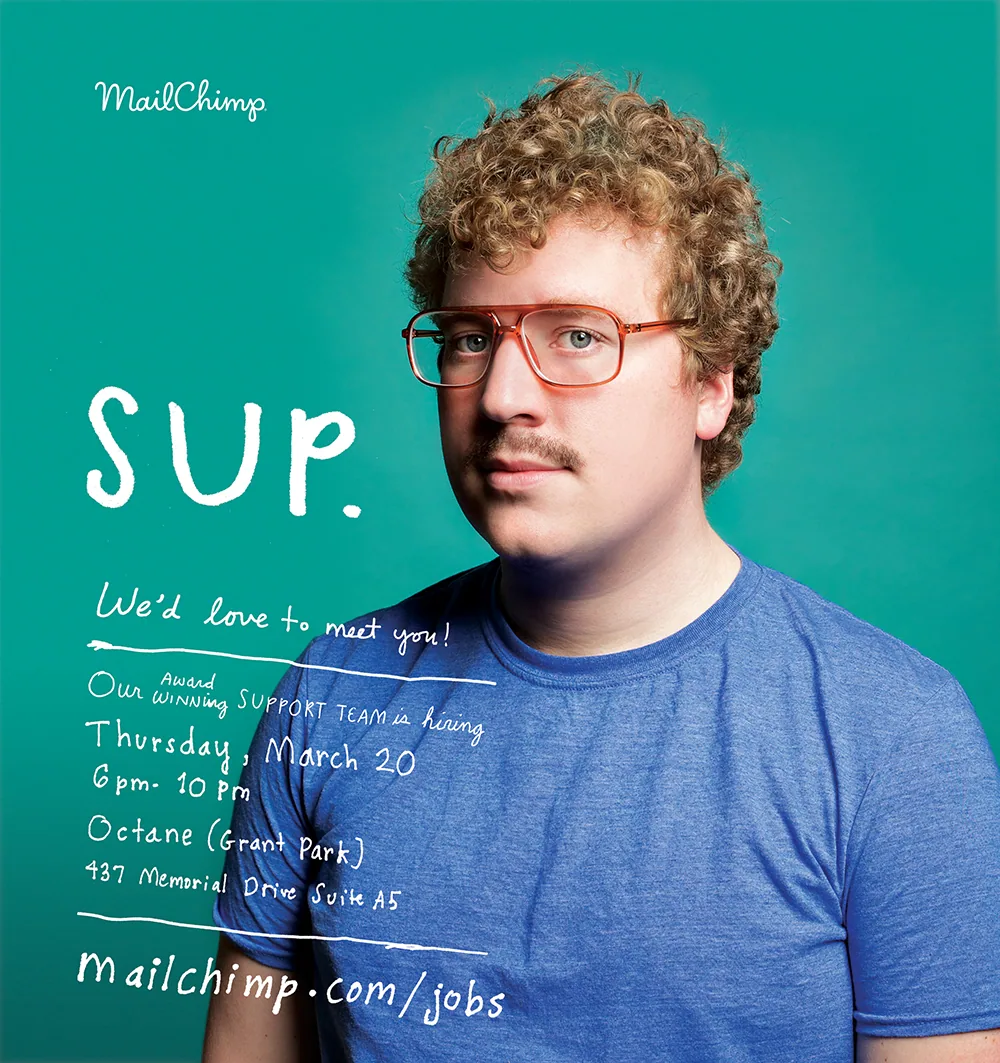
Mailchimp’s ads, inspired by the film Napoleon Dynamite, featured actual employees rather than models. Each person’s personality came through, and each ad made a different team feel like a place you’d want to join.
What to copy: Feature your real people. A photo and one honest quote from a future teammate builds more trust than any stock image. Ask for permission, and show a realistic mix of the people who actually work there.
8. Booking.com: Colorful and Informative
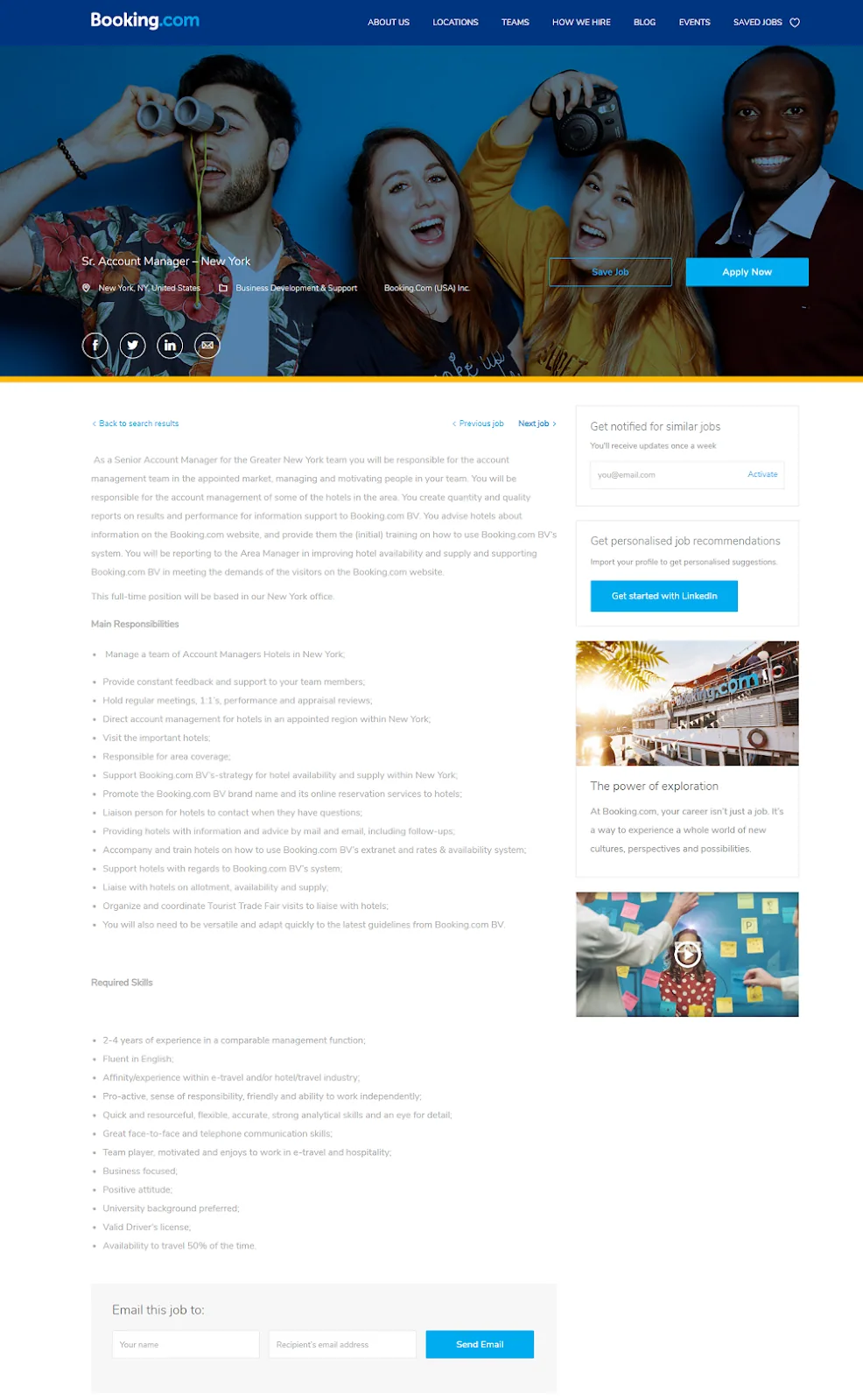
Booking.com took a more classic approach, but did it with style. A bright banner showed a diverse team, and underneath it candidates could find clear information on many kinds of roles, from software development to project management.
What to copy: Creative doesn’t have to mean gimmicky. A clean layout, a visual that shows who you are, and easy-to-find details for every role is a strong default for any company.
How to Write Job Ads Today
Creative hooks get attention, but the basics decide whether people apply. Here is what matters most now.
Include the pay range
Pay is often the first thing candidates look for. In a 2019 LinkedIn study, 61% of candidates said compensation was the most important part of a job description.
In many places, a pay range is now also a legal requirement. In the US, states including California, Colorado, Hawaii, Maryland, Nevada, New York and Washington already required pay ranges in job postings, and Illinois, Minnesota, New Jersey, Vermont and Massachusetts added similar rules during 2025, according to Littler (2025). Payscale (June 2026) reports that Virginia (July 1, 2026), Maine (July 29, 2026) and Connecticut (October 1, 2026) followed, and that New Brunswick in Canada brought in a similar rule in June 2026.
In the European Union, the Pay Transparency Directive requires that applicants get information on the starting pay or pay range, bans questions about pay history, and requires gender-neutral job titles and vacancy notices, as Littler (2025) summarizes. Member states were due to adopt it by June 7, 2026, but Payscale (June 2026) notes that most missed that deadline, so national rules are still arriving.
Rules differ by jurisdiction and change often, so check the requirements for every location (and remote location) a job is open to. The simplest approach is to include an honest range in every posting.
Use inclusive wording
Small word choices change who applies. ZipRecruiter found that job ads with gender-neutral wording got up to 42% more applicants, as HR Dive reported in 2016.
- Use gender-neutral job titles (“salesperson”, not “salesman”).
- Swap strongly coded words like “rockstar”, “ninja” or “aggressive” for plain descriptions of the work.
- Avoid age-coded phrases like “digital native” or “young and dynamic team”.
- Say how candidates can ask for adjustments during the hiring process.
Ask for skills, not just credentials
Many job ads list degrees and years of experience out of habit. Ask yourself whether each requirement is really needed on day one. Describe the outcomes the person will own and the skills they need to get there. Split the list into “must have” and “nice to have”, and keep the must-haves short. People who meet most of a long list often don’t apply.
Keep it short and mobile-friendly
Most candidates first see your ad on a phone. Shorter posts tend to do better: in the same 2019 LinkedIn study, posts of 1–300 words got 8.4% more applications per view than average, while posts over 600 words got only 1% more.
- Put the job title, location or remote status, and pay range at the top.
- Use short paragraphs and bullet points.
- Cut the generic company boilerplate down to two or three lines.
- Make the apply process quick on a phone, without forcing candidates to create an account first.
Write Job Descriptions Faster with Talenteria
A great job ad still starts with a solid job description. Talenteria’s AI content generator writes a job description from a job title, the tone you choose and your own notes, in many languages. You can then edit it and publish it to your career site and job boards. Use the examples above for the creative hook, and let the generator handle the first draft. Learn more at Talenteria.
In Conclusion
The best job ads have a few things in common. They speak to a specific audience, show real people and real work, and sound like the company behind them. Today, they also share the pay range, use inclusive words, focus on skills and read well on a phone.
You don’t need a viral campaign to get there. Pick one idea from these examples, combine it with the basics above, and your next job ad will stand out from the scroll.